Executive
The numbers, without the keys
The Exec surface gives the boardroom the bank's headline numbers — new customers, deposits, cards issued, payments stopped — over today, the last seven or thirty days, or the last twelve months. It is deliberately a narrow role: a manager reads every number and can rule on nothing.
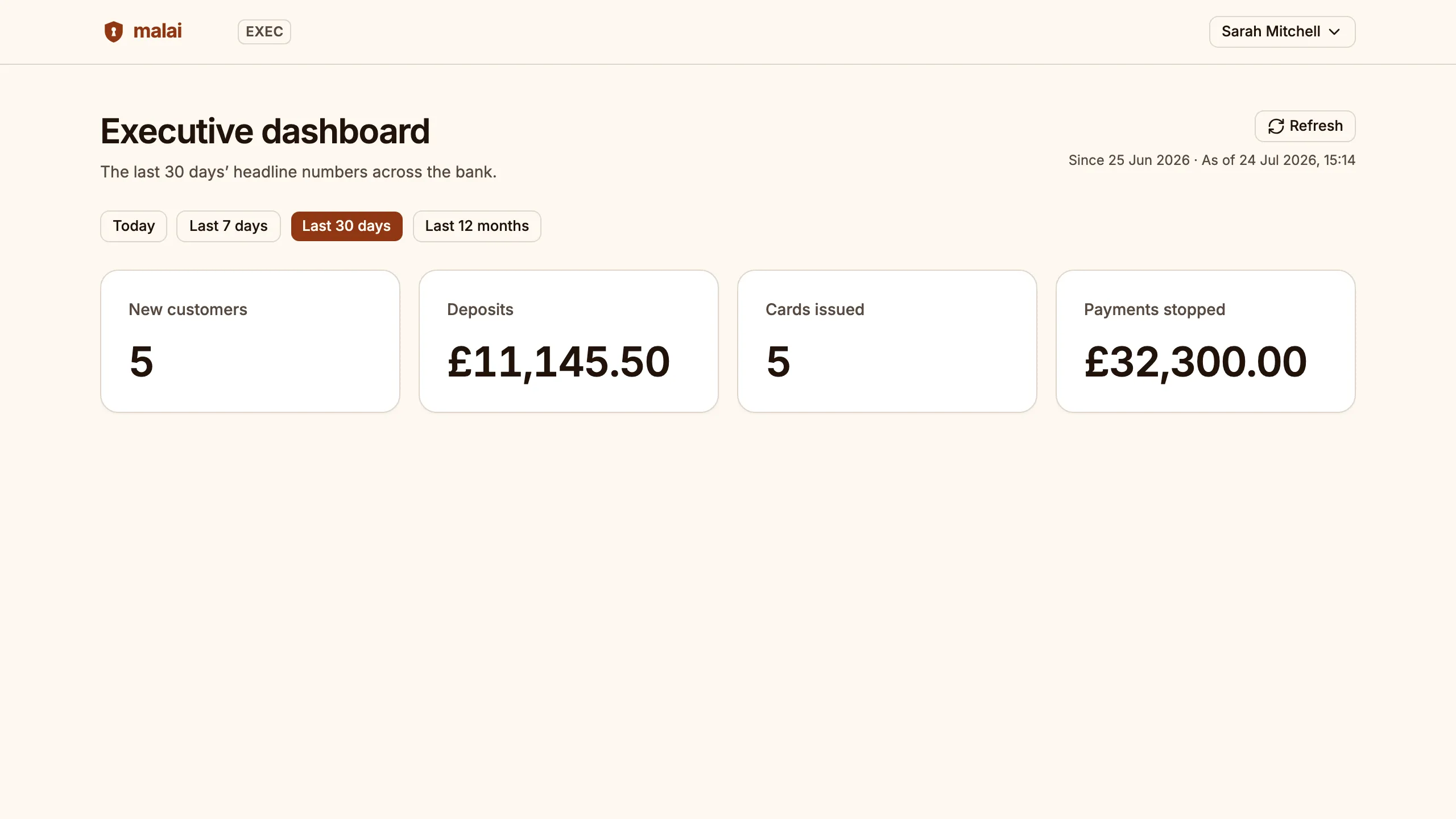
The executive dashboard in the live demo, reporting a 30-day window.
-
Honest numbers or none
A metric that cannot be computed renders as an em-dash — never a zero, never a stale figure dressed as fresh. Unavailability is part of the contract, and every reading carries its as-of moment.
-
Payments stopped — not fraud prevented
The dashboard counts the value of payments the bank declined through the ruling gate. It deliberately does not claim they were fraud: that is a claim the record cannot substantiate, so the platform refuses to make it.
-
Separation of duties, enforced at the API
The manager role reads the dashboard and nothing else. The decision worklist refuses that role at the API, not just in the interface — a bank can hand its CFO the numbers without handing over the power to rule on payments.
-
A composed read that owns nothing
The dashboard holds no data of its own. It fans out to the domains that do, with a timeout per source — one slow domain costs one tile, not the page.